
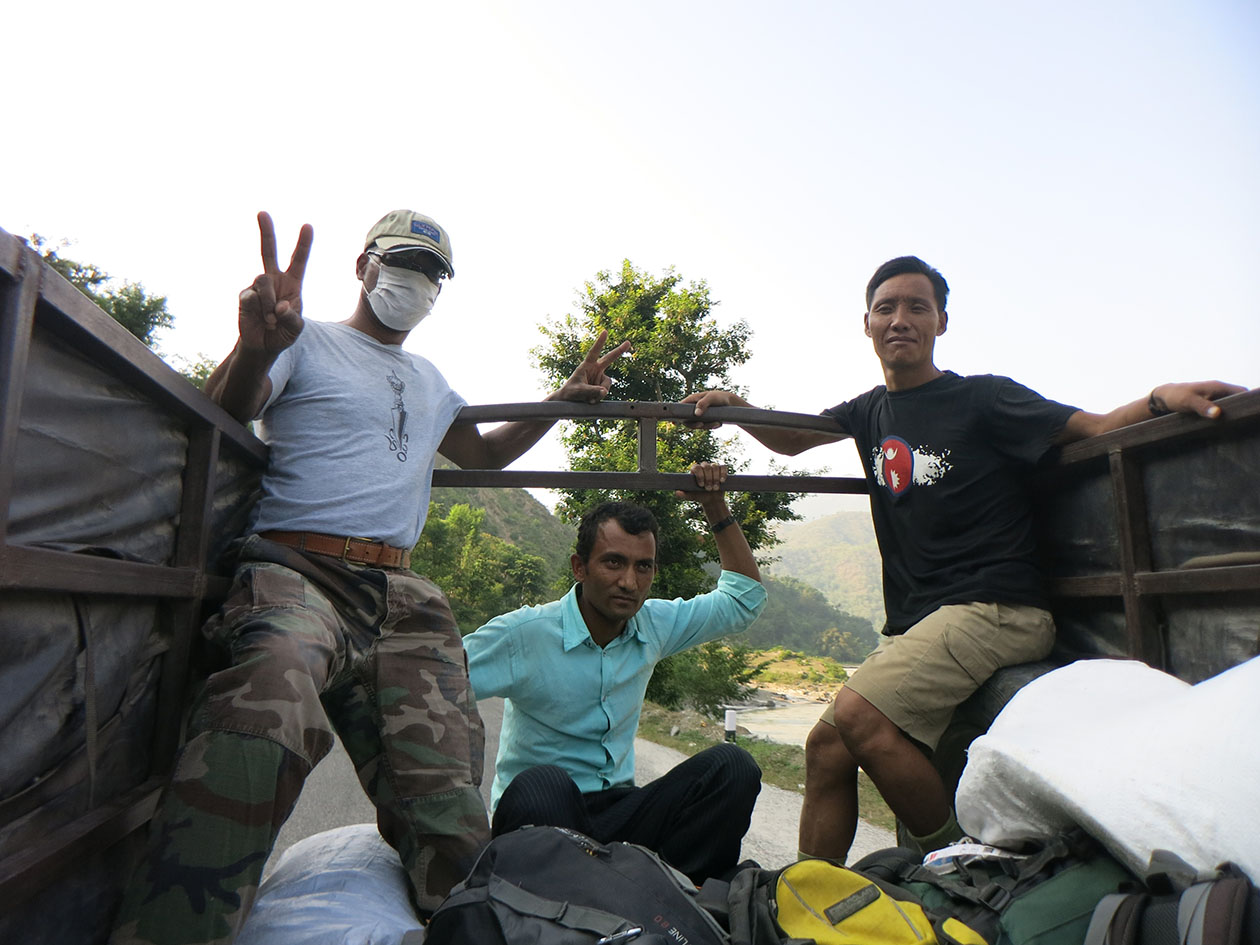
Traveling up towards the Foothills
Origins
In 2011, while traveling through a remote region of central Nepal, John Brooks heard something unexpected from local villagers.
A tiger had taken a calf the night before.
Not in a national park.
Not in a protected reserve.
But in the mountains — far from where tigers were believed to live.
For families who depend on their livestock, the loss of an animal can be devastating. In many parts of the world, the typical response to predator attacks is retaliation.
Instead, John compensated the family for their loss.
Word spread quickly through neighboring villages. A simple act helped prevent the use of poison or traps and opened the door to something more powerful than enforcement: trust.
Plans to return in 2015 to continue tracking signs of large cats were interrupted by Nepal’s devastating earthquake. Rather than abandon the region, the project shifted focus to helping communities rebuild — introducing earthquake-resistant earthbag homes.
From the beginning, the Nepal Tiger Project has been built on a simple idea:
Conservation works best when people feel supported.
Our Mission
Tigers are one of the most iconic — and endangered — species on Earth.
But conservation isn’t only about saving animals.
It’s about making sure people and wildlife can live together without one threatening the survival of the other.
The Nepal Tiger Project exists to explore an open question:
Could tigers be living in the high mountains of Nepal, beyond their known range?
And if they are — how do we protect both them and the people who share their landscape?
Our work focuses on:
-
Investigating reports of tigers in Nepal’s Okhaldhunga District
-
Working alongside local communities to reduce conflict with predators
-
Supporting schools and villages through conservation education
-
Promoting coexistence instead of retaliation
Because long-term conservation isn’t built on fences.
It’s built on relationships.
Why This Matters
Most conservation efforts focus on protecting wildlife inside national parks and reserves.
But the future of large predators may depend on something else entirely:
Whether they can survive beyond those boundaries.
If tigers are living in Nepal’s high mountain regions, it would challenge long-standing assumptions about where these animals can exist — and how conservation should work.
Instead of separating people and predators, the answer may lie in helping them coexist.
What we learn here could shape how conservation is approached far beyond Nepal.